
Male Figure
Edo period (1610–1868)
Medium
Hanging scroll cut from rollers; ink and colors in silk
Classification
hanging scroll
Department
Arts of Asia
Museum
Art Institute of Chicago
Accession Number
88560
Rights
Public Domain
Art Historical Context
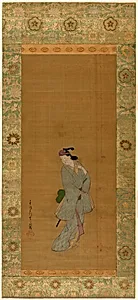
**Male Figure** by Miyagawa Chôshun, from Japan's Edo period (16151868), captivates with its refined portrayal of a solitary male subject. This hanging scroll, executed in ink and vibrant colors on silk, exemplifies the era's mastery of traditional Japanese painting. Originally mounted on rollers for selective display—often during intimate gatherings like tea ceremonies—this artwork has been carefully cut from its rollers, preserving its delicate beauty for modern appreciation. Housed in the Art Institute of Chicago's Arts of Asia department, it invites visitors to ponder the figure's poised elegance amid swirling robes and subtle expressions. Chôshun, active in the early 18th century, was a leading figure painter whose style bridged classical Kanô school traditions with the emerging ukiyo-e aesthetic of "floating world" themes. Hanging scrolls like this were prized possessions, unrolled to reveal layered narratives of humanity, nature, and emotion. The silk medium allowed for luminous washes and precise lines, techniques that brought life to the subject's dynamic pose and textured garments. During the prosperous Edo era, such works reflected a cultural shift toward personal refinement and urban sophistication, far from the samurai battles of earlier times. This intimate depiction highlights the period's fascination with human form, blending serenity and vitality in a format meant for contemplation. A gem of Japanese artistry, it reminds us how scrolls like these turned everyday walls into stages for timeless stories.