
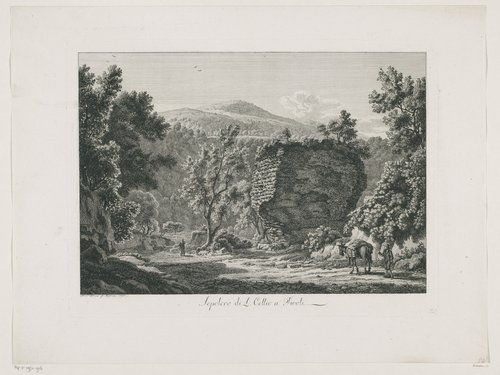
Malerisch radirte Prospekte aus Italien
Medium
etching
Dimensions
280; 378
Rights
Public Domain
About this artwork
Purchased with the support of the F.G. Waller-Fonds
Art Historical Context
**Malerisch radirtepekte aus Italien**Picturesque Etched Prospects from), created by Austrian artist Albert Christoph Dies in1795, captures the allure of Italy's landscapes through the delicate art of etching. Measuring 280 mm high by 378 mm wide, this print is one from a series that reflects the era's fascination withvedute*—detailed panoramic views popularized by artists like Canaletto. Dies, a versatile painter and engraver trained in Vienna, traveled extensively in Italy during late 18th century, drawing inspiration from its sunlit ruins, harbors, and rolling hills to evoke a sense of wanderlust. Etching, Dies' chosen medium, allowed for intricate, painterly lines etched into a metal plate with acid, producing rich tonal variations ideal for romanticized scenery. This technique democratized grand artistic visions, making Italian vistas accessible beyond oil paintings reserved for elites. Created amid the Enlightenment's Grand Tour tradition—where Europe's nobility journeyed to Italy for cultural enrichment—the work embodies neoclassical ideals of beauty and discovery, just before Napoleonic upheavals disrupted such travels. Acquired with support from the F.G. Waller-Fonds, this piece invites visitors to relive 18th-century wanderings, highlighting how prints preserved fleeting moments of sublime nature and architecture for posterity.
About the Artist
Albert Christoph Dies · 1755–1822
Albert Christoph Dies (1755–1822) was a German painter and writer who spent a significant portion of his career in Italy, working in the landscape tradition that drew so many Northern European artists to Rome during the late eighteenth century. Born in Hanover, Dies trained in the artistic milieu of the time and eventually made his way to Rome, where he became part of the community of German-speak...