
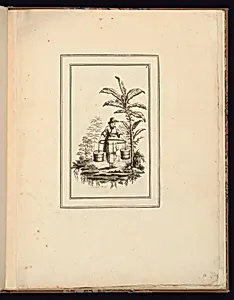
Man with Buckets
Medium
Classification
Department
Smithsonian Collection
Museum
Smithsonian American Art Museum
Credit
Purchased for the Museum by the Advisory Council
Accession Number
1921-6-379-14
Rights
Public Domain
About this artwork
Research in Progress
Art Historical Context
**Man with Buckets** (1773) is a charming print by French artist Jean-Baptiste Pillement1728–1808), now housed in the Smithsonian American Museum's Smithsonian Collection. Acquired through purchase by the Museum's Advisory Council, work captures Pillement's flair for everyday subjects amid the elegance of the late Rococo. As research on the piece continues, it offers a glimpse into 18th-century printmaking, a medium that allowed artists like Pillement to disseminate intricate designs widely and affordably across Europe. Pillement, a versatile Rococo master, was renowned for his delicate landscapes, floral motifs, and decorative tapestries, influencing styles from Portugal to Poland during his itinerant career. His prints often blended whimsical naturalism with playful figuration, reflecting the era's shift from Baroque grandeur toward lighter, more intimate expressions. Techniques such as etching or engraving would have enabled the fine lines and textures that define his output, making intricate details accessible to collectors and amateurs alike. This modest yet evocative depiction of a man with buckets highlights Pillement's skill in elevating ordinary life, underscoring prints' role in democratizing art. In the Smithsonian's holdings, it bridges European Rococo traditions with American collecting interests, inviting visitors to ponder the laborer's quiet dignity amid opulent times. (198 words)