
Man's Haori
late Edo period (1789–1868)/ Meiji period (1868–1912), 19th century
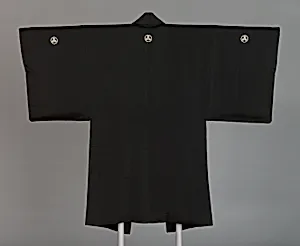
Medium
Silk, plain weave; resist dyed; lined with silk, plain weave; resist dyed
Dimensions
116.8 × 137.1 cm (46 × 54 in.); Neck to arm: H.: 59.3 cm (23 3/8 in.)
Classification
textile
Department
Textiles
Museum
Art Institute of Chicago
Accession Number
120203
Rights
Public Domain
Art Historical Context
This exquisite **Man's Haori**, a traditional Japanese jacket worn a kimono, dates to the late Edo period (178–1868) or Meiji era (1868–1912), a time of cultural transition in Japan. The Edo period's stability fostered vibrant textile arts, while the Me years brought Western influences amid rapid modernization. Haori like this one were essential for men's formal attire, signaling social status through their craftsmanship and design, often donned for festivals, theater outings, or everyday elegance. Crafted from silk plain weave, the haori employs resist-dyeing techniques—likely yūzen or similar methods—where wax or paste blocks dye to create intricate patterns on both the outer layer and silk lining. Measuring 116.8 × 137.1 cm (46 × 54 in.), with a neck-to-arm length of 59.3 cm (23 3/8 in.), it drapes gracefully, highlighting the era's mastery of lightweight, durable fabrics. These textiles were labor-intensive, produced by skilled artisans in regions like Kyoto, embodying Japan's reverence for nature-inspired motifs and seasonal symbolism. In the Art Institute of Chicago's Textiles collection, this anonymous masterpiece invites us to appreciate the haori's role in daily life and its enduring artistic legacy, bridging Japan's feudal past with its modern dawn.
About the Artist
Unknown
The artist designated as "Unknown" in our virtual museum's collection exemplifies a poignant chapter in art history: creators whose identities have faded into obscurity despite the enduring power of their work. With only one known artwork attributed to them in our holdings, this figure represents countless anonymous hands that shaped visual culture across centuries. Museums worldwide, including th...