
Mantel
Unknown Artist
last quarter 15th century
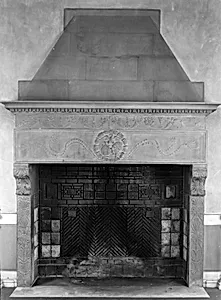
Medium
Limestone
Dimensions
Overall: 132 × 65 in. (335.3 × 165.1 cm)
Classification
Sculpture-Architectural
Culture
Italian
Department
European Sculpture and Decorative Arts
Museum
Metropolitan Museum of Art, New York, NY
Credit
Bequest of George Blumenthal, 1941
Accession Number
41.190.486
Rights
Public Domain
Art Historical Context
Step into the opulent world of late 15th-century Renaissance Italy with this striking limestone mantel, a masterpiece of architectural sculpture crafted by an unknown artist during the final quarter of the 1400s. Measuring an imposing 132 × 65 inches (335.3 × 165.1 cm), this grand fireplace surround would have anchored the hearth of a noble palace or villa, serving as both functional architecture and a canvas for artistic expression. Carved from durable limestone—a favored medium in Italy for its workability and weather resistance—the piece exemplifies the era's blend of utility and grandeur. During the Italian Renaissance, such mantels were pivotal in domestic interiors, transforming fireplaces into focal points of symmetry, classical motifs, and refined detailing. This example reflects the period's revival of ancient Roman forms, showcasing the technical prowess of sculptors who balanced bold scale with intricate carving. Though the artist's identity remains elusive, its Italian origins tie it to the innovative workshops of cities like Florence or Venice, where architecture and decoration intertwined. Today, this mantel graces the Metropolitan Museum of Art's Department of European Sculpture and Decorative Arts, thanks to the generous bequest of collector George Blumenthal in 1941. It invites visitors to imagine the flickering fires and lively gatherings it once illuminated, offering a tangible link to Renaissance splendor.