
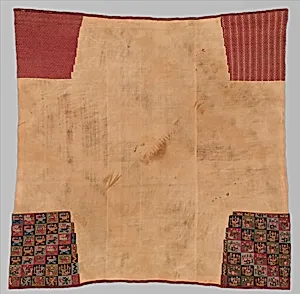
Mantle
Unknown Artist
7th–9th century
Medium
Cotton, camelid hair
Dimensions
W. 70 x H. 70 in. (177.8 x 177.8 cm)
Classification
Textiles-Woven
Culture
Wari
Department
Arts of Africa, Oceania, and the Americas
Museum
Metropolitan Museum of Art, New York, NY
Credit
The Michael C. Rockefeller Memorial Collection, Bequest of Nelson A. Rockefeller, 1979
Accession Number
1979.206.462
Rights
Public Domain
Art Historical Context
This magnificent *Mantle* from theari culture (7th9th century) transports us to the heart of ancient Peru's Andean highlands, where textiles were more than fabric—they were masterpieces of power and prestige. Woven from cotton and luxurious camelid hair (likely from alpacas or vicuñas), this square cloak measures an impressive 70 x 70 inches, large enough to drape over the shoulders of an elite figure. The Wari, a pre-Inca civilization that flourished in what is now Peru, mastered weaving on backstrap looms, creating densely patterned textiles that rivaled any in the ancient world. These mantles often served as ceremonial garments, diplomatic gifts, or elite burial shrouds, embodying the wearer's status. The artistic significance lies in the Wari's unparalleled technical skill: interlaced warps and wefts produced vibrant, durable cloths that could depict geometric motifs, mythical beings, or warriors—symbols of cosmic order and imperial might. As part of The Michael C. Rockefeller Memorial Collection at The Metropolitan Museum of Art, this piece highlights how Wari weavers elevated fiber arts to high culture, influencing later Inca traditions. Imagine the hands that spun these fibers under Andean skies, weaving stories into every thread. A true testament to innovation and artistry! (198 words)