
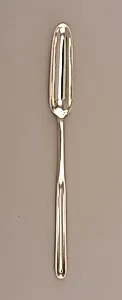
Marrow scoop
1792
Medium
cutlery
Classification
cutlery
Department
Smithsonian Collection
Museum
Smithsonian American Art Museum
Credit
Museum purchase from General Acquisitions Endowment
Accession Number
2005-10-1
Rights
Public Domain
About this artwork
Research in Progress
Art Historical Context
Nestled in the Smithsonian American Art Museum's collection, this marrow scoop crafted by William Fearn in 1792 exemplifies the exquisite functionality of early American cutlery. Fashioned as a specialized utensil, marrow scoops were essential tools for affluent diners, designed to extract the rich, gelatinous marrow from roasted beef bones—a prized delicacy symbolizing hospitality and refinement in late 18th-century households. Fearn, a skilled silversmith of the era, produced this piece during the early Federal period, when American craftsmanship began blending British influences with emerging national pride. The scoop's medium as cutlery highlights the artistry in everyday objects, where form met utility. Its slender, spoon-like design with a scooped end allowed precise extraction without waste, reflecting meticulous silversmithing techniques like hammering and chasing for durability and elegance. Acquired through the museum's General Acquisitions Endowment, this item offers a tangible glimpse into post-Revolutionary dining culture, where such silverware signified status amid a young nation's social aspirations. Though research continues, the marrow scoop invites us to savor the subtle sophistication of historical table manners, bridging fine art and domestic life.
About the Artist
William Fearn ( | ) · 1769 |1774 –1824 |1790
active 1769–1824|active 1774–90