
Mashrabiyya Screen
Unknown Artist
15th–16th century
Medium
Wood; turned
Dimensions
H. 81 in. (205.7 cm) W. 85 1/4 in. (216.5 cm) D. 11 3/4 in. (29.8 cm)
Classification
Wood
Department
Islamic Art
Museum
Metropolitan Museum of Art, New York, NY
Credit
Gift of S.S. Howland, 1910
Accession Number
11.86.6
Rights
Public Domain
Tags
Art Historical Context
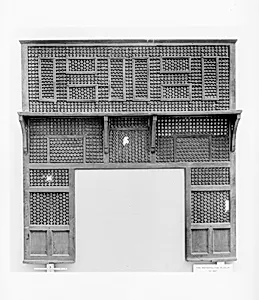
Step into the enchanting world of Islamic architecture with this magnificent *Mashrabiyya*, crafted by an unknown artist in the th–16th century Hailing from the Islamic world—likely Egypt or the broader Mamluk region—this towering wooden screen (over 6 feet high and wide) exemplifies the ingenuity of traditional design. Mashrabiyya, meaning "drinking place" or "window screen" in Arabic, were essential features in homes and mosques, projecting outward to catch breezes while shielding interiors from harsh sunlight. Masterfully executed in turned wood—a technique using a lathe to shape slender, geometric spindles into an intricate lattice—this screen's depth of nearly 12 inches allowed for three-dimensional projection, creating dynamic shadow play. The repetitive star and arabesque patterns not only diffused light and air but also upheld cultural norms of privacy, particularly for women, blending functionality with profound aesthetic harmony. Such screens highlight the Islamic emphasis on craftsmanship (*sanʿa*), where geometry symbolized divine order. Now a cherished gift to the Metropolitan Museum of Art in 1910, this screen invites us to appreciate the timeless fusion of art, utility, and spirituality in Islamic heritage. Gaze through its lattice and imagine the cool whispers of a historic courtyard.