
Mashrabiyya Screen
Unknown Artist
15th–16th century
Medium
Wood; turned
Classification
Wood
Department
Islamic Art
Museum
Metropolitan Museum of Art, New York, NY
Credit
Gift of S.S. Howland, 1910
Accession Number
11.86.8
Rights
Public Domain
Art Historical Context
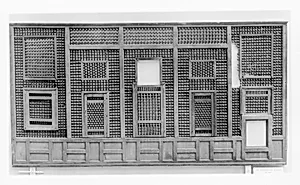
Nestled in the Islamic Art collection at The Metropolitan Museum of Art, this Mashrabiyya Screen from the 15th–16th century exemplifies the exquisite woodwork of the Mamluk era, likely originating from Egypt or the Levant. Mashrabiyya, a hallmark of traditional Islamic architecture, refers to intricately latticed wooden screens used in windows or balconies. These screens allowed light and breezes to filter into harems and private spaces while preserving modesty by obscuring views from the street below—a clever fusion of form and function in bustling medieval cities. Crafted from turned wood, the screen showcases masterful lathe work, where slender balusters and geometric motifs are spun and carved into a delicate, honeycomb-like lattice. This technique demanded immense skill, as artisans balanced structural strength with ornamental beauty, often drawing from arabesque patterns symbolizing paradise gardens. Beyond aesthetics, mashrabiyya promoted natural ventilation and cooling in hot climates, reflecting Islamic ingenuity in sustainable design. A generous gift from S.S. Howland in 1910, this anonymous masterpiece invites visitors to appreciate the anonymous genius of Islamic craftsmen, whose innovations continue to inspire modern architecture and design.