
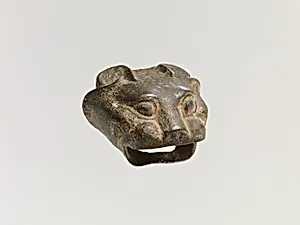
Mask of a Tiger
Unknown Artist
Medium
Bronze
Dimensions
H. 1 3/4 in. (4.4 cm); W. 2 1/8 in. (5.4 cm)
Classification
Metalwork
Culture & Period
China · Han dynasty (206 B.C.–A.D. 220) (?)
Department
Asian Art
Museum
Metropolitan Museum of Art, New York, NY
Credit
Rogers Fund, 1918
Accession Number
18.43.1
Rights
Public Domain
Tags
Art Historical Context
This exquisite bronze *Mask of a Tiger*, during China's Han dynasty (206 B.C.–A.D. 220), captures the fierce spirit of one of the most revered animals in ancient Chinese lore. Measuring just 1¾ inches high and 2⅛ inches wide, its petite scale belies its powerful presence, with finely detailed features like snarling fangs, prominent whiskers, and alert ears that evoke the tiger's role as a guardian against evil spirits and a symbol of martial prowess. Bronze metalwork flourished in the Han era, a period of imperial expansion and cultural innovation, where advanced lost-wax or piece-mold casting techniques allowed artisans to create intricate ritual objects and ornaments. Tigers often adorned ceremonial bronzes, weapons, or architectural fittings, embodying yang energy, protection, and exorcistic power in shamanistic practices and tomb furnishings. Though its exact function remains uncertain—perhaps as a decorative appliqué or ritual mask—this artifact reflects the Han fascination with animal totems and the cosmos. Acquired through the Rogers Fund in 1918, the mask now resides in the Metropolitan Museum of Art's Asian Art department, offering visitors a tangible link to ancient China's masterful metallurgy and mythical worldview.