
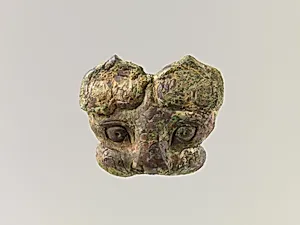
西周 青銅獣面紋飾|Fitting
Unknown Artist
10th century BCE
Medium
Bronze
Dimensions
H. 2 1/8 in. (5.4 cm); W. 2 1/2 in. (6.4 cm)
Classification
Metalwork
Culture & Period
China · Western Zhou dynasty (1046–771 B.C.)
Department
Asian Art
Museum
Metropolitan Museum of Art, New York, NY
Credit
Gift of Paul E. Manheim, 1967
Accession Number
67.43.10
Rights
Public Domain
Tags
Art Historical Context
This exquisite bronze fitting, titled *Western Zhou Bronze Animal Face Pattern Fitting*,ails from China's Western Zhou dynasty (1046771 BCE), a golden age of ritual bronzeware that symbolized imperial power and cosmic harmony. Crafted in the 10th century BCE, this small ornament—measuring just 2⅛ inches high and 2½ inches wide—was likely used to adorn chariots, bells, or furniture, reflecting the elite's obsession with durable, gleaming metalwork for ceremonial objects. The piece showcases the iconic *taotie* (animal mask) motif, here rendered with fierce lion-like features that evoke awe and protection. Zhou artisans employed sophisticated piece-mold casting techniques, pressing clay molds around a wax model before pouring molten bronze, allowing intricate patterns of bulging eyes, horns, and snarling jaws to emerge with crisp precision. These masks weren't mere decoration; they embodied shamanistic beliefs, warding off evil and channeling spiritual forces during rituals. Housed in the Metropolitan Museum of Art's Asian Art Department (gift of Paul E. Manheim, 1967), this fitting offers a window into Zhou society's hierarchical world, where bronze mastery signified divine favor. Its compact scale belies its monumental cultural role, bridging the mortal and supernatural realms.