
Materials from Patchwork Bedspread
c. 1936
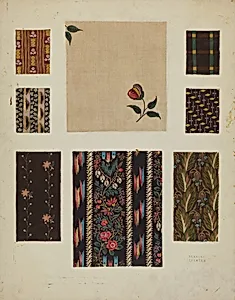
Medium
watercolor, gouache, and graphite on paperboard
Dimensions
overall: 35.2 x 27.4 cm (13 7/8 x 10 13/16 in.)
Classification
Index of American Design
Department
CG-W
Museum
National Gallery of Art, Washington, D.C.
Credit
Index of American Design
Accession Number
1943.8.1001
Rights
Public Domain
Art Historical Context
**Materials from Patchwork Bed** by Frances Lichten, around 1936, captures the vibrant essence of American folk craftsmanship through watercolor, gouache, and on paperboard. Measuring 35.2 x 27.4 cm, this study showcases the diverse fabrics and patterns that would compose a traditional patchwork bedspread—a testament to the resourcefulness of American homemakers who transformed scraps into artful designs. As part of the *Index of American Design*, New Deal-era Federal Art Project (1935–1942), Lichten's work documents the nation's rich decorative arts heritage during the Great Depression. Sponsored by the Works Progress Administration, the Index employed artists to render over 15,000 precise illustrations of folk objects, preserving cultural treasures for future generations. Lichten, a skilled illustrator, contributed numerous textile studies, highlighting quilts as symbols of thrift, community, and creativity in rural America. The mixed media technique shines here: watercolors and gouache lend luminous color and texture to the fabrics, while graphite adds meticulous detail to stitches and patterns. Housed in the National Gallery of Art, this piece invites visitors to appreciate how everyday materials embodied American ingenuity, bridging historical craft with modern appreciation.
About the Artist
Frances Lichten · 1855–present
Frances Lichten was born in Bellefonte, Pennsylvania, in 1889. At fourteen she enrolled in the Pennsylvania Museum School of Industrial Art, where she studied design and interior decoration, while also pursuing landscape painting at the Pennsylvania Academy of Fine Arts. After graduating she worked as a commercial artist for nearly a decade, building the technical foundation that would later serve...