
Maximilian Armet
Unknown Artist
ca. 1525
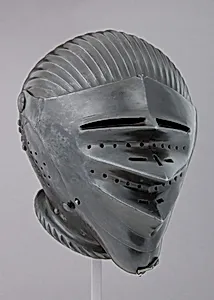
Medium
Steel
Dimensions
H. 10 1/4 in. (26 cm); W. 8 3/4 in. (22.2 cm); D. 12 1/2 in. (31.8 cm); Wt. 5 lb. 8.8 oz. (2517.4 g)
Classification
Helmets
Culture
German
Department
Arms and Armor
Museum
Metropolitan Museum of Art, New York, NY
Credit
Gift of William H. Riggs, 1913
Accession Number
14.25.555
Rights
Public Domain
Art Historical Context
Step into the world of Renaissance warfare with the *Maximilian Armet*, masterful steel helmet crafted in Germany around 1525. This compact piece, measuring just 10¼ inches high and weighing a sturdy 5 pounds 8.8 ounces, exemplifies the of late medieval armor design. Named after Holy Roman Emperor Maximilian I whose court championed innovative fluted styles, the armet was a close-fitting helmet for knights, featuring a pivoting visor, cheek plates, and a protective bevor for full head and neck coverage. Its modest dimensions made it ideal for agile combat or tournaments. Forged from high-quality steel, the armet's construction highlights German armorers' expertise in balancing protection, mobility, and aesthetics. The "Maximilian" style often incorporated ridges or fluting to deflect blows while reducing weight, a clever engineering feat during an era when plate armor reached its zenith before firearms altered the battlefield. Donated to the Metropolitan Museum of Art in 1913 by collector William H. Riggs, it now resides in the Arms and Armor department, offering a tangible link to the chivalric age. Though the artist remains unknown, this helmet's survival speaks to its enduring cultural resonance— a symbol of German martial prowess and the blend of form and function that defined 16th-century Europe.