
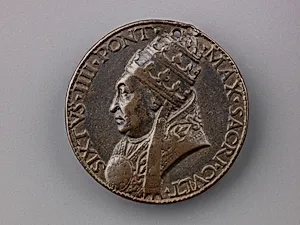
Medal: Sixtus IV
Medium
Bronze (Copper alloy with warm brown patina and remnants of black wax or lacquer)
Dimensions
Diam. 4.1 cm, wt. 36.38 g
Classification
Medals
Department
Robert Lehman Collection
Museum
Metropolitan Museum of Art, New York, NY
Credit
Robert Lehman Collection, 1975
Accession Number
1975.1.1279
Rights
Public Domain
Tags
Art Historical Context
This exquisite bronze medal, struck in 1471 by Lysippus the Younger, commemorates Pope Sixtus IV, who ascended to the papacy that year as Francesco della Rovere. Measuring just 4.1 cm in diameter and weighing 36.38 grams, it belongs to the Renaissance tradition of portrait medals—small, portable sculptures that revived ancient Roman coinage while celebrating contemporary figures. Housed in the Metropolitan Museum Art's Robert Lehman Collection 1975, it the Pope's likeness with remarkable detail, reflecting the era's fascination with individualized portraiture. Lysippus the Younger, named after the famed ancient Greek sculptor, was a pioneering Italian medallist working in the quattrocento. His medals blended classical idealism with naturalistic observation, a hallmark of early Renaissance humanism. The warm brown patina and traces of black wax or lacquer on this copper-alloy piece enhance its antique allure, mimicking the weathered beauty of excavated Roman artifacts—a deliberate nod to antiquity's prestige. These medals weren't mere trinkets; they served as diplomatic gifts, personal mementos, and propaganda tools, disseminating the Pope's image across Europe. Sixtus IV, a patron of the arts who rebuilt Rome's infrastructure, including the Sistine Chapel, embodies the Renaissance papacy's cultural ambitions. This intimate artwork invites us to ponder a pivotal moment when art and power intertwined.