
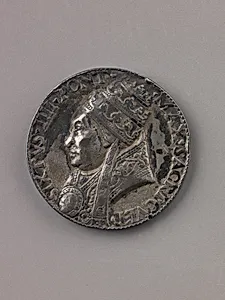
Medal: Sixtus IV
Medium
Silver
Dimensions
Diam. 4 cm, wt. 30.13 g
Classification
Medals
Department
Robert Lehman Collection
Museum
Metropolitan Museum of Art, New York, NY
Credit
Robert Lehman Collection, 1975
Accession Number
1975.1.1280
Rights
Public Domain
Tags
About this artwork
This medals by artist Lysippus the Younger exemplifies the artistic achievements of 1471. Cast or worked in silver, this piece exemplifies sophisticated metalworking traditions. The creation of metal objects involved complex processes including casting, chasing, engraving, and finishing that required years of apprenticeship and specialized knowledge. The object's dimensions—diam. 4 cm, wt. 30.13 g—reflect both practical considerations and aesthetic intentions. Metalwork served diverse purposes f...
Art Historical Context
Crafted in 1471 by the skilled medalist Lysippus the, this silver medal honors Pope Sixtus IV, who ascended to the papacy that year. Measuring just 4 cm in diameter and weighing 30.13 grams, its petite scale belies its grandeur, embodying the Renaissance revival of ancient Roman portrait medals as a prestigious art form. Lysippus, drawing on classical traditions, captured the pope's likeness with remarkable precision, blending portraiture with symbolic authority. The medal showcases masterful silverworking techniques honed through years of apprenticeship: casting for the initial form, followed by chasing, engraving, and meticulous finishing. These processes highlight the era's fusion of artistry and craftsmanship, where medals served both devotional and commemorative roles—from religious veneration to elite collecting. Sixtus IV's patronage of the arts, including the Sistine Chapel, underscores the medal's cultural resonance amid 15th-century Italy's humanistic fervor. Preserved in the Metropolitan Museum of Art's Robert Lehman Collection since 1975, this piece illuminates Lysippus's practice and broader patterns of Renaissance metalwork. It invites visitors to appreciate how such objects bridged monetary value, aesthetic innovation, and historical legacy, offering timeless insights into papal power and artistic ambition.