
Medallion
18th century
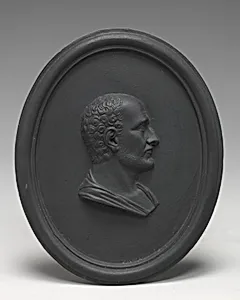
Medium
Black basalt ware
Dimensions
2 3/4 × 2 1/4 in. (7 × 5.7 cm)
Classification
Ceramics-Pottery
Culture
British, Etruria, Staffordshire
Department
European Sculpture and Decorative Arts
Museum
Metropolitan Museum of Art, New York, NY
Credit
The Glenn Tilley Morse Collection, Bequest of Glenn Tilley Morse, 1950
Accession Number
50.187.22
Rights
Public Domain
Tags
Art Historical Context
Step into the refined world of 18th-century British ceramics with Josiah Wedgwood's *Medallion*, a petite masterpiece measuring just 2¾ × 2¼ inches. Crafted from black basalt ware—an unglazed, matte stoneware that mimics the dark luster of ancient volcanic rock—this profile portrait of a man exemplifies Wedgwood's mastery in capturing dignified male visages. Produced in his famed Etruria factory in, England, it reflects the era's neoclassical passion for classical antiquity, where small-scale reliefs like this adorned homes as elegant decorative objects. Wedgwood, a pioneering potter often called the "Father of English Pottery," developed black basalt ware in the 1760s to evoke the durability and aesthetic of Greek and Roman artifacts. Fired at high temperatures for a smooth, jet-black finish, the medium allowed intricate detailing without fragility, making it ideal for medallions, cameos, and vases. This technique revolutionized ceramics, blending industrial innovation with artistic revivalism during the Enlightenment. Housed in the Metropolitan Museum of Art's European Sculpture and Decorative Arts collection, this piece from the Glenn Tilley Morse bequest invites us to appreciate how Wedgwood democratized luxury, bridging ancient inspiration with Georgian elegance. A testament to British ingenuity, it whispers stories of profile portraits that honored heroes, scholars, and myths.
About the Artist
Josiah Wedgwood · 1730–1795
Josiah Wedgwood (1730–1795) was born in Burslem, Staffordshire, the thirteenth child of a potter whose family had worked in the craft since the seventeenth century. Apprenticed to his elder brother Thomas following their father's death, he went on to a partnership with Thomas Whieldon of Fenton — the most respected potter in England at the time — which gave him command of all the principal techniq...