Ctrl K
1730–1795
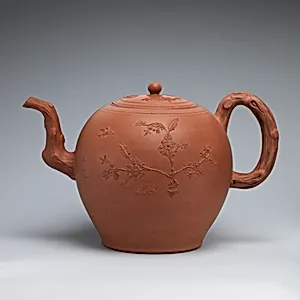
Josiah Wedgwood (1730–1795) was born in Burslem, Staffordshire, the thirteenth child of a potter whose family had worked in the craft since the seventeenth century. Apprenticed to his elder brother Thomas following their father's death, he went on to a partnership with Thomas Whieldon of Fenton — the most respected potter in England at the time — which gave him command of all the principal techniques of contemporary ceramics while affording him scope to experiment. A bout of smallpox that cost him his right leg paradoxically proved productive: the forced inactivity allowed him sustained time for research, and it was during this period that he laid the systematic foundations for the innovations that would transform his industry.
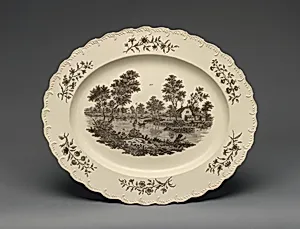
Wedgwood established his own pottery in Burslem in 1759. His first major technical breakthrough was a refined cream-coloured earthenware of exceptional consistency and elegance. When Queen Charlotte adopted this ware for the royal household in 1765, Wedgwood renamed it Queen's ware, and through his gift for marketing — including showrooms in London and an early practice of celebrity endorsement — he established it as the standard domestic pottery throughout Britain and across international markets. In 1769 he opened Etruria, a purpose-built factory and model village near Stoke-on-Trent, which represented one of the first planned industrial establishments in England.
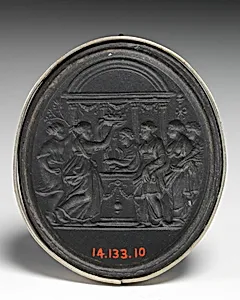
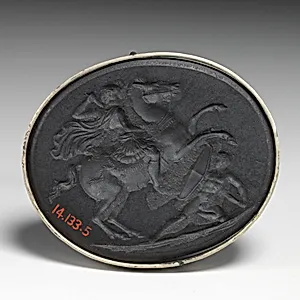
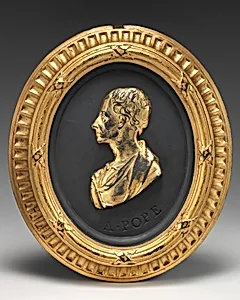
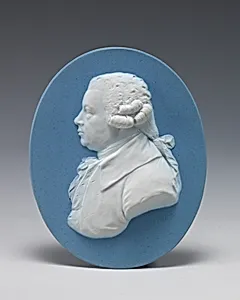
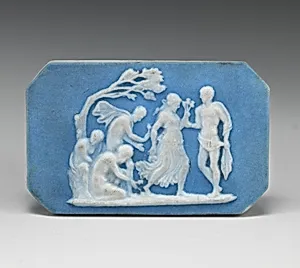
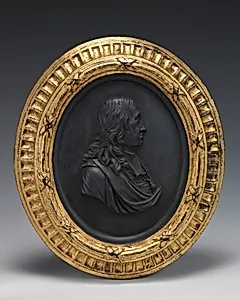
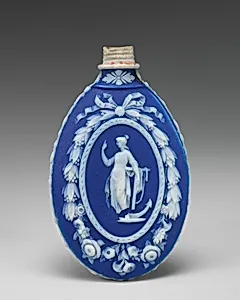
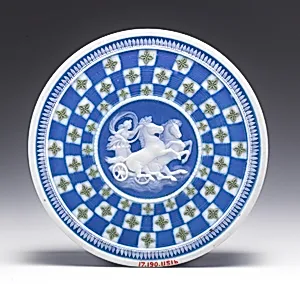
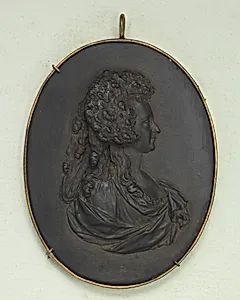
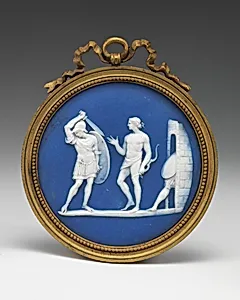
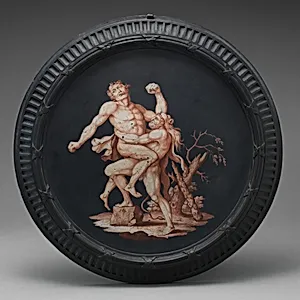
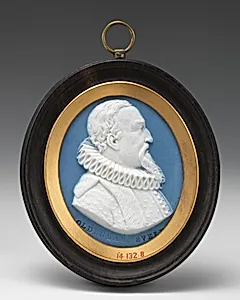
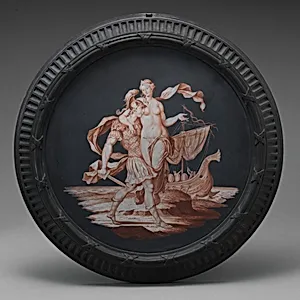
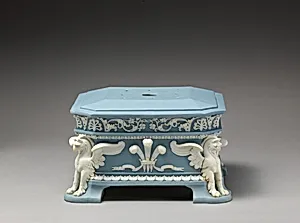
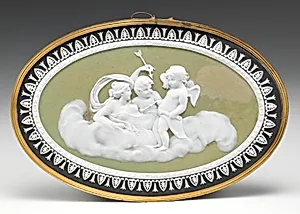
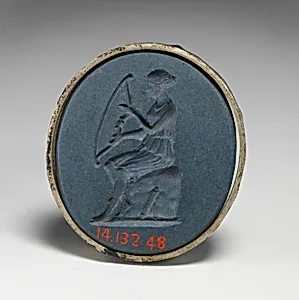
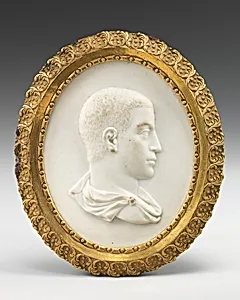
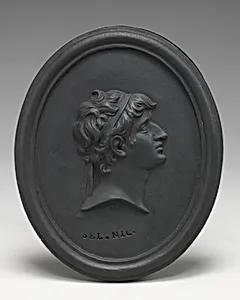
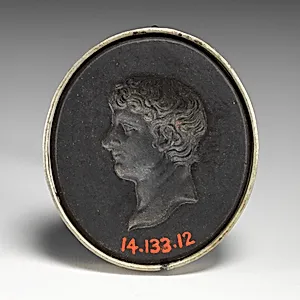
Wedgwood's most celebrated artistic achievement was jasperware, an unglazed fine stoneware that he developed after more than five thousand carefully documented experiments. Characteristically blue, green, or black, with applied white relief decoration in the neoclassical manner, jasperware drew directly on the antique imagery championed by figures such as the sculptor John Flaxman, who designed many of Wedgwood's most distinguished relief compositions. The Portland Vase — a series of copies Wedgwood produced of the famous Roman cameo glass vessel beginning in 1789 — remains among the most technically demanding and artistically admired objects in the history of English ceramics. Wedgwood was elected a Fellow of the Royal Society in 1783 for his invention of a pyrometer capable of measuring kiln temperatures.
Wedgwood died in 1795, one of the wealthiest men in England, having transformed a regional craft industry into a globally recognised luxury brand. Beyond pottery, he was a committed abolitionist, a supporter of the American and French Revolutions, and the grandfather of Charles Darwin. His legacy encompasses industrial organisation, design history, and social entrepreneurship in equal measure.