
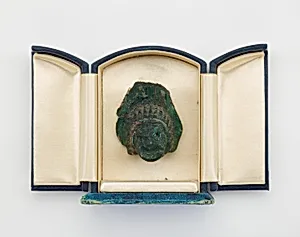
Medallion
100-200
Medium
Decorative Arts-Glass
Classification
Decorative Arts-Glass
Department
Smithsonian Collection
Museum
Smithsonian American Art Museum
Credit
Smithsonian American Art Museum, Gift of John Gellatly
Accession Number
1929.8.167.1
Rights
Public Domain
Art Historical Context
Welcome to the Smithsonian American Art, where we encounter the enigmatic *Medallion*, a delicate glass artifact crafted by an unidentified artist between 100 and 200 AD. This piece exemplifies early decorative arts in glass, a medium prized in antiquity for its versatility and luminous beauty. Likely produced during the height of the Roman Empire, medallions were often used as pendants, inlays, or ornamental inserts, showcasing the era's advanced glassblowing and molding techniques. Glassmaking in this period represented a pinnacle of ancient craftsmanship, with artisans achieving transparency and color through innovative methods like free-blowing and mold-forming. Though details of its exact design remain elusive without further description, the *Medallion*'s survival speaks to the durability and allure of Roman glasswork, which influenced decorative traditions for centuries. Its presence in the Smithsonian's collection highlights the global scope of American art history, bridging ancient ingenuity with modern appreciation. Generously gifted by collector John Gellatly, this treasure invites us to ponder the anonymous hands behind it—artisans whose skill turned silica into sparkling jewels of daily life. A quiet testament to enduring artistry, it reminds visitors of glass's timeless role in human expression.
About the Artist
Unidentified ( ) · –