
Medallion with a Queen Holding a Scepter and Falcon
Unknown Artist
ca. 1240–60
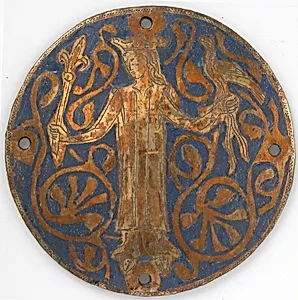
Medium
Copper: engraved and gilt; champlevé enamel: medium and light blue and white
Dimensions
Overall: 3 1/2 x 1/16 in. (8.9 x 0.2 cm)
Classification
Enamels-Champlevé
Culture
French
Department
Medieval Art
Museum
Metropolitan Museum of Art, New York, NY
Credit
Gift of J. Pierpont Morgan, 1917
Accession Number
17.190.2144
Rights
Public Domain
Tags
Art Historical Context
This exquisite medallion, crafted in France around 1240–60, depicts a regal queen clutching a scepter in one hand and a falcon the other, symbols of royal authority and noble pastime. Measuring just 3½ inches across and remarkably thin at 1/16 inch, this tiny treasure from the Medieval Art collection at the Metropolitan Museum of Art adorned jewelry, reliquaries, or liturgical objects, showcasing the era's fascination with portable luxury. The artwork exemplifies champlevé enamel, a prized 13th-century technique where artisans engraved cells into a copper base, gilded it for shine, and filled the troughs with vibrant medium and light blue, plus white enamels, then fired them to fuse color and metal. Thriving in workshops like those of Limoges, this method allowed for intricate, durable designs that captured Gothic elegance—flowing lines and symbolic motifs evoking power and falconry, a sport reserved for the elite. Gifted by J. Pierpont Morgan in 1917, the medallion offers a glimpse into high medieval courtly life, where queens embodied sovereignty and falcons signified prestige. Its survival highlights the technical mastery of anonymous French enamellers, blending artistry with devotion in an age of cathedrals and chivalry.