
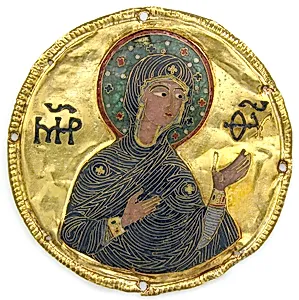
Medallion with the Virgin from an Icon Frame
Unknown Artist
ca. 1100
Medium
Gold, silver, and enamel worked in cloisonné
Dimensions
Diam: 3 1/4 in. (8.3 cm) Mount: 20 1/2 x 15 x 7/8 in. (52.1 x 38.1 x 2.2 cm)
Classification
Enamels-Cloisonné
Culture
Byzantine
Department
Medieval Art
Museum
Metropolitan Museum of Art, New York, NY
Credit
Gift of J. Pierpont Morgan, 1917
Accession Number
17.190.675
Rights
Public Domain
Tags
Art Historical Context
Nestled within the opulent world of Byzantine art, this *Medallion with the Virgin* dates to around 1100 and once adorned an icon frame, a sacred surround for religious panels venerated in Orthodox Christian worship. Crafted by an unknown artist, the small circular medallion—measuring just 3¼ inches in diameter—features the Virgin Mary, a central figure in Byzantine devotion known as the Theotokos, or "God-bearer." Its luxurious materials of gold, silver, andisonné enamel reflect the era's imperial patronage spiritual fervor, during the Komnenian dynasty when Constantinople was a beacon of artistic innovation. Cloisonné enamel, the medallion's defining technique, involves shaping thin gold wires into cells (cloisons) filled with colored glass-like enamel, then firing to create vivid, durable images. This method, perfected in Byzantium, produced jewel-like brilliance resistant to fading, making it ideal for liturgical objects that endured centuries of use and reverence. The medallion's intricate workmanship highlights the fusion of metalwork and painting, elevating religious icons from mere images to holy treasures. Today, housed in the Metropolitan Museum of Art's Medieval Art department as a gift from J. Pierpont Morgan in 1917, this piece offers a glimpse into 12th-century piety and craftsmanship. Though detached from its full frame (now mounted at 20½ x 15 inches), it captivates with its timeless glow, inviting visitors to ponder the Virgin's enduring role in bridging heaven and earth.