
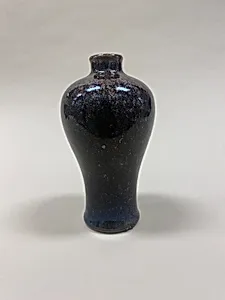
Meiping vase
Unknown Artist
late 18th century
Medium
Porcelain with iron-rust glaze (Jingdezhen ware)
Dimensions
H. 6 3/4 in. (17.1 cm); Diam. 3 5/8 in. (9.2 cm)
Classification
Ceramics
Culture & Period
China · Qing dynasty (1644–1911)
Department
Asian Art
Museum
Metropolitan Museum of Art, New York, NY
Credit
Bequest of Benjamin Altman, 1913
Accession Number
14.40.9
Rights
Public Domain
Art Historical Context
This delicate Meiping vase, crafted in late 18th-century China during the Qing dynasty (1644–1911), exemplifies the pinnacle of imperial porcelain production at Jingdezhen, the renowned center for fine ceramics. Standing just 6¾ inches tall with a graceful pear-shaped body and slender neck, it was designed to hold plum blossoms—a nod to the "Three Friends of Winter" in Chinese symbolism, representing resilience and purity. Its modest dimensions (3⅝-inch diameter) made it ideal for scholarly tables or altars, blending utility with elegance. The vase's standout feature is its iron-rust glaze, a sophisticated technique where iron oxide in the feldspathic glaze fired to produce a rich, mottled reddish-brown hue, evoking rust or autumn leaves. Jingdezhen kilns mastered such effects through precise control of temperature and atmosphere in dragon kilns, showcasing Qing potters' technical virtuosity amid a booming export trade to Europe and beyond. This piece reflects the dynasty's opulent aesthetic, influenced by imperial tastes for monochromatic glazes over intricate decorations. Acquired through the 1913 bequest of collector Benjamin Altman, the vase now graces the Metropolitan Museum of Art's Asian Art collection, inviting visitors to appreciate China's enduring ceramic legacy—one small vessel encapsulating centuries of innovation and cultural refinement.