
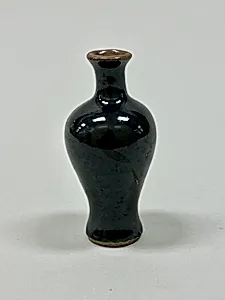
Miniature vase
Unknown Artist
19th century
Medium
Porcelain with black glaze and trace of gilt (Jingdezhen ware)
Dimensions
H. 2 3/4 in. (7 cm); Diam. 1 3/8 in. (3.5 cm)
Classification
Ceramics
Culture & Period
China · Qing dynasty (1644–1911)
Department
Asian Art
Museum
Metropolitan Museum of Art, New York, NY
Credit
Edward C. Moore Collection, Bequest of Edward C. Moore, 1891
Accession Number
91.1.392
Rights
Public Domain
Art Historical Context
This delicate miniature vase, hailing from China's Qing dynasty (1644–1) in the 19th century exemplifies the unparalleled porcelain craftsmanship of Jingdezhen the imperial kiln center renowned as the "porcelain capital of the world Standing a mere 2 3/4 inches (7 cm) tall with a diameter of 1 3/8 inches (3.5 cm), it features a glossy black glaze—a sophisticated technique that creates a dramatic, mirror-like sheen—accented by faint traces of gilt for subtle opulence. Jingdezhen wares were prized for their technical perfection, often produced for the imperial court or elite collectors, blending functionality with artistry. The black glaze, achieved through precise firing of iron-rich slips, evokes the moody elegance of Song dynasty tenmoku glazes but adapted for Qing tastes, highlighting the dynasty's innovative revival of ancient styles amid growing export demands. Such tiny vases were likely cherished as scholar's objects or decorative curiosities, symbolizing refinement and connoisseurship in Chinese culture. Acquired through the Edward C. Moore Collection and now in the Metropolitan Museum of Art's Asian Art department, this piece invites us to marvel at the miniaturist's skill and the enduring allure of Qing porcelain.