
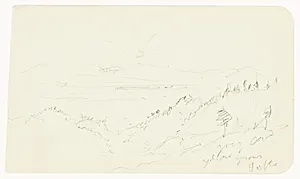
Mexican Landscape
Medium
landscapes
Classification
landscapes
Department
Smithsonian Collection
Museum
Smithsonian American Art Museum
Credit
Gift of Louis P. Church
Accession Number
1917-4-1223
Rights
Public Domain
About this artwork
Research in Progress
Art Historical Context
Frederic Edwin Church, a leading figure of the Hudson River School, the majestic beauty of a Mexican landscape in this oil painting from 1883–1884. Born in 1826, Church was renowned for his luminous, detailed depictions of nature, often drawing from extensive travels to exotic locales. By his late 50s, afflicted with rheumatoid arthritis, he turned to more intimate, studio-based works like this one, evoking the dramatic vistas that defined his career—from Niagara Falls to the volcanoes of South America. This reflects Church's mastery of luminism, a style emphasizing ethereal light effects and atmospheric depth to convey the sublime power of the natural world. Painted toward the end of his life, it showcases his enduring fascination with Latin American scenery, possibly inspired by earlier journeys or vivid recollections. The composition invites viewers to immerse themselves in the rugged terrain and vibrant skies, symbolizing 19th-century American artists' quest to portray untouched wilderness amid rapid industrialization. Now part of the Smithsonian American Art Museum's collection, gifted by Church's son Louis P. Church, *Mexican Landscape* offers a poignant glimpse into the artist's twilight years. Though research continues, it stands as a testament to his lifelong passion for evoking wonder through paint.