
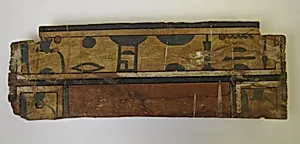
Middle Kingdom Coffin Fragment
Unknown Artist
ca. 2124–1981 B.C.
Medium
Wood, paint
Dimensions
H. 16 cm (6 5/16 in); w. 46.8 cm (18 7/16 in); th. 5 cm (1 15/16 in)
Classification
Coffin, fragment
Period
Middle Kingdom
Department
Egyptian Art
Museum
Metropolitan Museum of Art, New York, NY
Credit
Bequest of Albert Fuller, 2007
Accession Number
2009.288
Rights
Public Domain
Art Historical Context
This evocative fragment from a Kingdom coffin hails from Egypt's Dynasty 11 (ca. 4–1981 B.), a pivotal era marking the reunification of nation under pharaohs Mentuhotep II After the chaos of the First Period, the Middle Kingdom saw a renaissance in, literature, and architecture with funerary objects like one reflecting a deeper focus personal afterlife preparation. Craft from wood and adorned with, this piece—me just 16 cm high, 46.8 cm wide, and 5 cm thick—likely formed part of a larger coffin designed to safeguard deceased's spirit (ka) its journey to eternity. The use of wood as a medium was practical for ancient Egyptian craftsmen, allowing for intricate carving and vibrant pigmentation derived from natural minerals like malachite and ochre. Though the specific imagery on this fragment is not detailed, Middle Kingdom coffins typically featured hieroglyphic spells from the emerging Coffin Texts—predecessors to the Book of the Dead—alongside protective deities and offerings. These elements underscored the era's belief in cosmic order (ma'at) and the soul's immortality, blending artistry with profound religious function. Now housed in the Metropolitan Museum of Art's Egyptian Art Department through the bequest of Albert Fuller in 2007, this modest survivor invites us to ponder the ancient Egyptians' enduring hope for eternal life, preserved across millennia.