
Coffin of Teti
Unknown Artist
ca. 1550–1458 B.C.
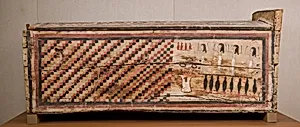
Medium
Wood (ficus sycomorus), paint, mortar, plaster, stucco
Dimensions
l. 184 cm (72 7/16 in); w. 44 cm (17 5/16 in); h. 76 cm (29 15/16 in)
Classification
Coffin, Teti, rectangular
Period
Early New Kingdom
Department
Egyptian Art
Museum
Metropolitan Museum of Art, New York, NY
Credit
Rogers Fund, 1912
Accession Number
12.181.302a, b
Rights
Public Domain
Tags
Art Historical Context
Step into ancient Egypt with the *Coffin of Teti*, a stunning survivor from the Early New Kingdom around 1550–1458 B.C., during the early Dynasty 18. Crafted for an individual named Teti—likely a high-ranking official—this anthropoid coffin reflects the era's revival of monumental art and deep spiritual beliefs following the Hyksos expulsion. It embodies the Egyptians' quest for eternal life, serving as a protective vessel for the mummy in the afterlife journey. Masterfully constructed from ficus sycomorus wood (the native sycamore fig, prized for its durability), the coffin was layered with mortar, plaster, and stucco before being vividly painted. These techniques created a smooth, colorful surface ideal for intricate hieroglyphs, deities, and protective spells—hallmarks of New Kingdom funerary art. At 184 cm long, 44 cm wide, and 76 cm high, its human-scale form mimics the deceased, blending realism with symbolism to ensure safe passage through the underworld. Acquired through the Rogers Fund in 1912 and now housed in the Metropolitan Museum of Art's Egyptian Art department, this coffin offers a tangible link to a golden age of pharaohs like Thutmose III. It highlights how everyday elites aspired to royal immortality, making the mysteries of ancient rituals feel vividly alive today.