
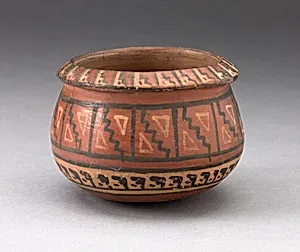
Miniature Bowl with Geometric Textile-Like Pattern
1450–1532
Medium
Ceramic and pigment
Dimensions
6 × 8.3 cm (2 3/8 × 3 1/4 in.)
Classification
bowl
Department
Arts of the Americas
Museum
Art Institute of Chicago
Accession Number
91480
Rights
Public Domain
Art Historical Context
This exquisite miniature bowl, crafted by Inca artisans between 1450 and 1532, exemplifies the refined ceramic traditions of the Inca Empire in South America. just 6 × 8.3 cm, its petite scale suggests it may have served ceremonial or elite purposes, fitting neatly in the hand. Made from ceramic with applied pigments, the bowl features a striking geometric pattern that mimics the intricate textiles for which the Incas were renowned—weavers of fine cotton and wool with bold, repeating motifs symbolizing cosmic order and social hierarchy. The design's textile-like quality highlights a key Inca artistic technique: translating the visual language of weaving onto clay surfaces. Inca potters fired ceramics in specialized kilns to achieve durable, often slipped surfaces, then added pigments for vivid contrast. This interplay between crafts underscores the empire's integrated aesthetic, where patterns conveyed cultural identity and imperial power during its height under rulers like Pachacuti. Housed in the Art Institute of Chicago's Arts of the Americas department, this bowl offers a window into pre-Columbian ingenuity, reminding us how everyday objects embodied profound cultural values just before the Spanish arrival in 1532. A true gem for any visitor!
About the Artist
Inca
Inca artists, operating anonymously within the vast Inca Empire from approximately 1425 to 1532 CE, were masterful creators whose works symbolized imperial power and unity across the Andes. Thriving in the heart of Cuzco, the empire's capital, these skilled artisans—men and women alike—produced textiles, ceramics, and metalwork that served both practical and ceremonial purposes. Gifted craftspeopl...