
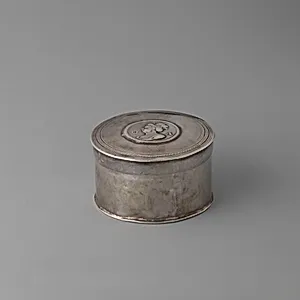
Miniature box with cover
ca. 1702–14
Medium
Silver
Dimensions
Overall: 1 7/16 × 2 in. (3.7 × 5.1 cm)
Classification
Metalwork-Silver-Miniature
Culture
British, London
Department
European Sculpture and Decorative Arts
Museum
Metropolitan Museum of Art, New York, NY
Credit
The Joseph M. and Aimee Loeb May Collection, 1963
Accession Number
63.53.59a, b
Rights
Public Domain
Tags
Art Historical Context
This exquisite miniature silver box with cover, crafted by the London silversmith T.K. around 1702–14, captures the refined elegance of early 18-century British metalwork. just 1 7/16 × 2 inches, its diminutive scale belies the meticulous craftsmanship typical of the Queen Anne period, when such luxury objects were prized as personal treasures—perhaps for holding snuff, beauty patches, or small keepsakes. Housed in the Metropolitan Museum of Art's European Sculpture and Decorative Arts department, it entered the collection via The Joseph M. and Aimee Loeb May Collection in 1963. The box exemplifies the artistry of London silver workshops, renowned for their technical precision and subtle ornamentation. Likely featuring profile motifs (as suggested by its classification), the silver surface would have been chased, engraved, or embossed to create delicate, intimate designs, showcasing the era's shift toward lighter, more graceful forms compared to the opulence of the preceding Baroque style. British hallmarks from this time not only authenticated the maker but also ensured the metal's purity, reflecting strict guild standards. In a broader cultural context, these miniatures highlight the growing taste for portable luxury among the British elite, blending functionality with personal expression. Delve closer, and you'll appreciate how T.K.'s work embodies the dawn of Georgian refinement, a testament to silver's enduring role in everyday opulence.