
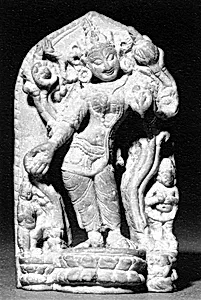
Miniature Buddhist Deity
Unknown Artist
12th century
Medium
Mud stone
Dimensions
H. 2 5/8 in. (6.7 cm)
Classification
Sculpture
Culture & Period
Bangladesh or India (Bengal) · Pala period
Department
Asian Art
Museum
Metropolitan Museum of Art, New York, NY
Credit
Samuel Eilenberg Collection, Gift of Samuel Eilenberg, 1987
Accession Number
1987.142.317
Rights
Public Domain
Tags
Art Historical Context
This exquisite *Miniature Buddhist Deity carved from mudstone in the 12 century during Bengal's Pala period, hails from either modern-day Bangladesh or India. The Pala dynasty (8th–12th centuries) was a golden age for Buddhist art in eastern India, where royal patronage fostered intricate sculptures depicting enlightened beings. Standing just 2 5/8 inches (6.7 cm) tall, this pocket-sized figure exemplifies the era's mastery of miniature forms, likely intended for personal devotion or portable shrines. Crafted in the characteristic Pala style, the sculpture showcases the region's fine-grained mudstone—a durable, dark material prized for its ability to capture delicate details like flowing robes, serene expressions, and symbolic gestures (mudras) invoking protection or wisdom. Pala artists blended Indian tantric Buddhism with local aesthetics, producing deities that bridged the divine and human realms, influencing art across Asia. Now part of the Metropolitan Museum of Art's Asian Art collection, gifted by Samuel Eilenberg in 1987, this rare survivor offers a intimate glimpse into medieval Bengal's spiritual life, where such talismans accompanied pilgrims on their quests for enlightenment.