
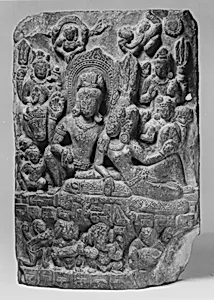
Shiva Seated with Parvati
Unknown Artist
ca. 10th century
Medium
Stone
Dimensions
H. 12 3/8 in. (31.4 cm); W. 8 1/4 in. (21 cm)
Classification
Sculpture
Culture
Nepal (Kathmandu Valley)
Department
Asian Art
Museum
Metropolitan Museum of Art, New York, NY
Credit
Gift of Cynthia Hazen Polsky, 1985
Accession Number
1985.398.4
Rights
Public Domain
Tags
Art Historical Context
This exquisite stone sculpture from Nepal's Kathmandu Valley, dating to around the 10th century, Shiva seated intimately with his consort Parvati, the divine couple known as Uma-Maheshvara.ved during a golden age of Himalayan art under the Licchavi dynasty's influence, such works were central to Hindu temple worship, symbolizing the harmonious union of Shiva—the cosmic destroyer and ascetic—and Parvati, the nurturing goddess of power fertility. This pairing reflects core Shaivite theology, where their embrace signifies the balance of male and female energies essential for creation and cosmic order. Crafted from stone, a favored medium in the region for its durability and ability to capture intricate details, the sculpture stands just over 12 inches tall, suggesting it served as a devotional object for personal shrines or smaller altars rather than grand temple facades. Kathmandu Valley artisans excelled in low-relief carving techniques, blending graceful proportions with symbolic motifs that evoke serenity and divine playfulness. Today, this rare survivor graces the Metropolitan Museum of Art, a gift from Cynthia Hazen Polsky in 1985, offering visitors a tangible link to medieval Nepal's vibrant religious artistry.