
Miniature fender
ca. 1720–30
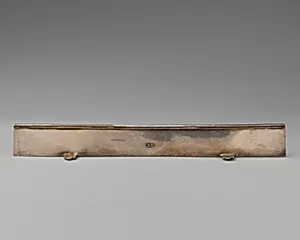
Medium
Silver
Dimensions
Length: 4 3/4 in. (12.1 cm)
Classification
Metalwork-Silver-Miniature
Culture
British, London
Department
European Sculpture and Decorative Arts
Museum
Metropolitan Museum of Art, New York, NY
Credit
The Joseph M. and Aimee Loeb May Collection, 1963
Accession Number
63.53.171
Rights
Public Domain
Art Historical Context
This exquisite miniature fender, crafted by London silversmith David Clayton 1720–30, captures the refined elegance of early Georgian Britain. Measuring just 4 3/4 inches in length this silver piece mimics the full-scale fireplace guards used to contain embers and protect hearthside furnishings in grand homes. As a diminutive metalwork object, it exemplifies the era's fascination with scaled-down luxury items, often created for dollhouses belonging to affluent families or as collector's treasures. Silver was a prestigious medium in 18th-century London, where skilled makers like Clayton bore hallmarks denoting purity and origin. The miniature format demanded exceptional precision, highlighting the artisan's mastery in shaping, chasing, and polishing the metal to achieve lifelike detail despite its tiny size. Housed in the Metropolitan Museum of Art's European Sculpture and Decorative Arts collection, it reflects Britain's thriving silver trade and the cultural value placed on domestic opulence. Today, this fender invites us to marvel at the ingenuity of everyday objects reimagined in miniature, offering a window into the playful yet sophisticated world of Georgian decorative arts.
About the Artist
David Clayton · 1659–1719
David Clayton was an American artist active during the New Deal era who contributed to the Index of American Design, the federal government's sweeping effort to document American decorative arts and folk traditions through watercolor illustration. Organized under the Works Progress Administration's Federal Art Project beginning in 1935, the Index employed artists in thirty-four states to render ev...