
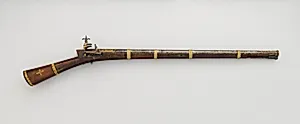
Miquelet Gun
Unknown Artist
dated A.H. 1199/ 1784–85 CE
Medium
Steel, wood, bone, copper alloy, gold
Dimensions
L. 46 1/2 in. (118.0 cm); L. barrel 33 1/2 in.; Cal. .80 in. (20.0 mm); Wt. 7 lb. 11 oz. (3496 g)
Classification
Firearms-Guns-Miquelet
Culture
Turkish
Department
Arms and Armor
Museum
Metropolitan Museum of Art, New York, NY
Credit
Bequest of George C. Stone, 1935
Accession Number
36.25.2164
Rights
Public Domain
Art Historical Context
This exquisite Miquelet gun, crafted in Turkish workshops around 1784–85 CE (dated A.H. 1199), exemplifies the pinnacle of Ottoman arms craftsmanship during the late 18th century. As a shoulder-fired firearm with a miquelet lock—a reliable flintlock mechanism in the Mediterranean and Islamic world—it bridged traditional weaponry and emerging gunpowder technology. Measuring 46½ inches long with a hefty 7 pounds 11 ounces, its .80-caliber barrel made it a formidable tool for infantry or cavalry, reflecting the Ottoman Empire's ongoing military innovations amid European influences. The gun's materials—steel for the robust barrel and lock, wood and bone for ergonomic grips, copper alloy accents, and lavish gold inlays—highlight masterful metalworking and decorative arts. Gold damascening or overlay techniques, common in Turkish arms, transformed functional steel into ornate status symbols, often gifted to elites or used in ceremonial contexts. These embellishments not only prevented corrosion but also showcased the artisan's skill in fusing utility with beauty. Bequeathed to the Metropolitan Museum of Art by George C. Stone in 1935, this piece from the Arms and Armor Department invites us to appreciate how firearms were both weapons of war and canvases for cultural expression in the Ottoman realm.