
Mirror
Unknown Artist
ca. 1550–1295 B.C.
Medium
Bronze or copper alloy
Dimensions
H. 23 cm (9 1/16 in.); Diam. 12.6 cm (4 15/16 in.); wt. 353 gr (12.5 oz.)
Classification
Mirror, woman, papyrus
Period
New Kingdom
Department
Egyptian Art
Museum
Metropolitan Museum of Art, New York, NY
Credit
Gift of Helen Miller Gould, 1910
Accession Number
10.130.1311
Rights
Public Domain
Art Historical Context
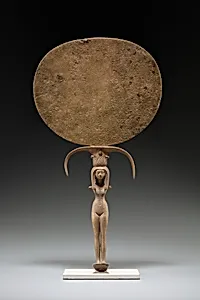
This elegant bronze or copper alloy mirror hails from Egypt's New Kingdom, specifically Dynasty 18 (ca. 1550–1295 B.C.), a golden age of imperial power and artistic refinement under pharaohs like Thutmose III and Amenhotep III. Standing 23 cm tall with a 12.6 cm diameter disc and weighing a substantial 353 grams, it exemplifies the finely crafted personal grooming tools reserved for the elite. These hand-held mirrors featured a polished metal surface for reflection, attached to a sturdy handle—likely symbolic in form, though details of its decoration remain unrecorded. Crafted through lost-wax casting, a sophisticated technique that allowed for intricate details, the mirror's reflective bronze or copper alloy was prized for its gleaming finish, evoking the sun god Ra and ideals of beauty and purity. In ancient Egyptian culture, mirrors were more than utilitarian; they appeared in tombs as offerings, linking the living to the afterlife and underscoring daily rituals of adornment among nobility. Luxuries like this one highlight the era's advanced metallurgy and societal emphasis on aesthetics. Today, this artifact graces the Metropolitan Museum of Art's Egyptian Art collection, a generous 1910 gift from Helen Miller Gould, inviting us to glimpse the polished world of New Kingdom sophistication.