
Mirror
Unknown Artist
19th century
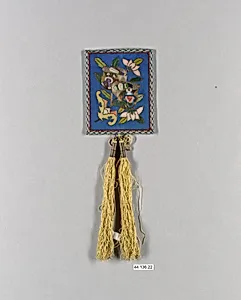
Medium
Glass, silk, metallic thread
Dimensions
4 x 3 in. (10.16 x 7.62 cm)
Classification
Textiles-Woven
Culture & Period
China · Qing dynasty (1644–1911)
Department
Asian Art
Museum
Metropolitan Museum of Art, New York, NY
Credit
Gift of Florance Waterbury, 1944
Accession Number
44.136.22
Rights
Public Domain
Art Historical Context
This exquisite 19th-century pocket mirror from China's Qing dynasty (1644–1911) exemplifies the's masterful blend of functionality and opulent decoration. Measuring just 4 x 3 inches, this diminutive treasure—crafted with a glass mirror framed or backed by woven silk and shimmering metallic threads—was likely a personal accessory for elite women, reflecting the dynasty's prosperity and love for luxurious everyday objects. Classified as a woven textile in the Metropolitan Museum of Art's Asian Art collection, the piece highlights advanced weaving techniques that intertwined fine silk with metallic threads to create intricate patterns and a lustrous sheen. During the Qing period, such craftsmanship was a hallmark of imperial workshops and skilled artisans, often incorporating motifs symbolizing good fortune, longevity, or floral elegance—though specific designs here evoke the refined aesthetic of late-dynastic decorative arts. Gifted to the Met in 1944 by Florance Waterbury, this "Mirror" offers a glimpse into the intimate world of Qing material culture, where even small items embodied artistic excellence and social status. Visitors, imagine slipping this radiant heirloom into a silk sleeve for a journey across ancient trade routes!