
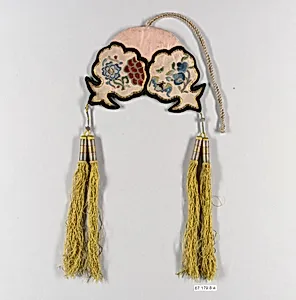
Case with Cover
Unknown Artist
19th century
Medium
Silk and metallic-thread embroidery on silk satin and float-patterned plain-weave silk
Dimensions
Overall excluding tassels: 11 x 5 in. (27.9 x 12.7 cm)
Classification
Costumes-Accessories
Culture & Period
China · Qing dynasty (1644–1911)
Department
Asian Art
Museum
Metropolitan Museum of Art, New York, NY
Credit
Gift of Florance Waterbury, 1967
Accession Number
67.179.8a, b
Rights
Public Domain
Art Historical Context
This exquisite "Case with Cover" China's Qing dynasty (16441911) is a delicate example of 19th-century accessory craftsmanship, measuring just 11 x 5 inches excluding its tassels. Crafted the Asian Art tradition, it likely served as a protective container for personal items like jewelry or smoking accessories, reflecting the era's emphasis on refined, portable luxury. Donated to the Metropolitan Museum of Art 1967 by Flor Waterbury, it embodies opulence of late imperial China, when such objects were status symbols for the elite. The case showcases masterful embroidery using silk and metallic threads on a base of silk satin and float-patterned plain-weave silk. The float weave creates subtle textural depth, while metallic threads—often gold or silver—catch the light, evoking imperial splendor and warding off evil spirits in traditional beliefs. Qing embroidery techniques, honed over generations, highlight the skill of anonymous artisans, blending practicality with artistry in everyday finery. As a costume accessory, this piece offers a window into Qing social life, where intricate handwork signified cultural refinement and prosperity. Visitors can appreciate how such small treasures preserved beauty amid the dynasty's transformative years.