
Mirror Case
Unknown Artist
ca. 1350
Medium
Elephant ivory
Dimensions
Overall: 3 1/4 x 3/8 in. (8.2 x 1 cm)
Classification
Ivories-Elephant
Culture
French
Department
Medieval Art
Museum
Metropolitan Museum of Art, New York, NY
Credit
Gift of J. Pierpont Morgan, 1917
Accession Number
17.190.247
Rights
Public Domain
Tags
Art Historical Context
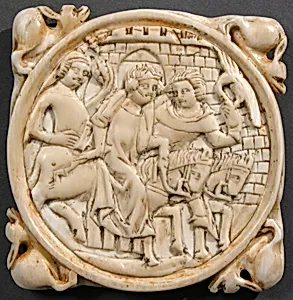
This exquisite *Mirror Case* from ca. 1350 exemplifies the artistry of medieval French ivory carving. Crafted from elephant ivory—a rare and luxurious material imported from afar—this small, portable object (just 3¼ × ⅜ inches) served as a noblewoman's vanity item. Its surface features finely incised scenes of men, horses, and animals, capturing chivalric pursuits like hunting or courtship, themes popular in Gothic-era personal adornments from Paris workshops. Ivory's smooth, luminous quality made it ideal for intricate relief work, where carvers used sharp tools to create delicate figures and dynamic compositions. Produced during the height of the International Gothic style, such cases blended realism with stylized elegance, reflecting the era's fascination with courtly love and aristocratic leisure. These objects were status symbols, often gifted among the elite. Today, housed in the Metropolitan Museum of Art's Medieval Art Department (gift of J. Pierpont Morgan, 1917), this anonymous masterpiece offers a glimpse into 14th-century French culture, where everyday items became canvases for storytelling and opulence.