
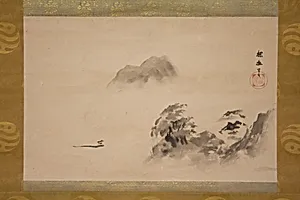
Misty Landscape
early 19th century
Medium
Hanging scroll; ink on paper
Dimensions
Image: 12 7/16 × 19 3/16 in. (31.6 × 48.8 cm) Overall with mounting: 49 7/16 × 25 3/16 in. (125.5 × 63.9 cm) Overall with knobs: 49 7/16 × 27 1/16 in. (125.5 × 68.8 cm)
Classification
Paintings
Culture & Period
Japan · Edo period (1615–1868)
Department
Asian Art
Museum
Metropolitan Museum of Art, New York, NY
Credit
The Howard Mansfield Collection, Purchase, Rogers Fund, 1936
Accession Number
36.100.79
Rights
Public Domain
Tags
Art Historical Context
**Misty Landscape** *Kano School, early 19th century*Hanging scroll; ink on paper (31.6 × 488 cm) *Metropolitan Museum of Art Asian Art Department* This evocative *Misty Landscape*, created by an artist of the renowned Kano School during Japan's Edo period (1615–1868), captures the serene beauty of nature through delicate ink washes on paper. The Kano School, favored by the Tokugawa shoguns, dominated official painting for centuries, blending Chinese Song dynasty influences with Japanese sensibilities. Their landscapes often evoke poetic introspection, using mist to soften forms and suggest vast, atmospheric depths—perfectly suiting the intimate format of a hanging scroll, designed to be unrolled for seasonal display in homes or temples. Rendered in monochrome ink, the work exemplifies the school's mastery of *suibokuga* (ink painting), where subtle gradations create illusionistic space without color. During the prosperous Edo era, such scrolls reflected ukiyo-e influences and Zen-inspired tranquility, offering urban elites an escape into nature's mystery. Acquired through The Howard Mansfield Collection via the Rogers Fund in 1936, this piece highlights the Met's commitment to Edo artistry, inviting viewers to ponder the fleeting beauty of mist-shrouded horizons.