
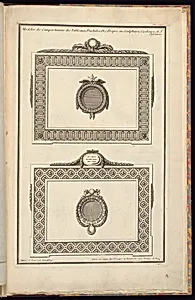
Modèles de Compartimens des Tableaux, Pendules, &c. Propre au Sculpteurs, Ciseleurs et Orfevres
Medium
Classification
Department
Smithsonian Collection
Museum
Smithsonian American Art Museum
Credit
Purchased for the Museum by the Advisory Council
Accession Number
1921-6-371-13
Rights
Public Domain
About this artwork
Research in Progress
Art Historical Context
Step into the ornate world of 18th-century decorative arts with *Modèles de Compartimens des Tableaux, Pendules, &c. Propre au Sculpteurs, Ciseleurs et Orfevres* (1763), a delicate print by Flemish artist Jean-François de Neufforge (1714–1791). This work, now in the Smithsonian American Art Museum's Smithsonian Collection, offers intricate design templates for framing paintings, clocks, and more—tailored specifically for sculptors, metal chasers, and goldsmiths. As a print, it exemplifies the era's booming market for pattern books, which allowed artisans across Europe to replicate sophisticated motifs with precision. Created during the lavish Rococo period, Neufforge's engraving captures the playful elegance of scrolling forms and symmetrical compartments that defined luxury furnishings. Though research on this piece is ongoing, its title reveals its practical purpose: democratizing high-style decoration for skilled craftsmen. Neufforge, trained in Flanders and active in Paris, bridged Northern precision with French opulence, influencing furniture and interior design from grand chateaus to bourgeois homes. This modest yet masterful print highlights how graphic arts fueled the decorative revolution of the Enlightenment, making elite aesthetics accessible. Acquired through the museum's Advisory Council, it invites us to appreciate the unsung blueprints behind Europe's gilded age.