
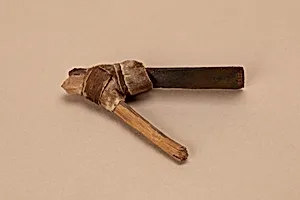
Model adze
Unknown Artist
ca. 1981–1802 B.C.
Medium
Copper, wood, animal hide
Dimensions
7.2 cm (2 13/16 in)
Classification
Model adze
Period
Middle Kingdom
Department
Egyptian Art
Museum
Metropolitan Museum of Art, New York, NY
Credit
Gift of Edward S. Harkness, 1917
Accession Number
17.9.22
Rights
Public Domain
Art Historical Context
This exquisite model adze, crafted around 1981–1802.C. during Egypt's Middle Kingdom (Dyn 12), offers a glimpse into the daily life and spiritual beliefs of ancient Egyptians. Standing just 7.2 cm tall, this miniature tool—complete with a copper blade, wooden handle, and binding of animal hide—was likely created as a funerary offering. Placed in tombs, such models symbolized the practical implements the deceased would need in the afterlife, reflecting the era's renewed prosperity and artistic focus on realism after the chaotic First Intermediate Period. The adze's construction highlights skilled ancient craftsmanship: the copper blade, valued for its durability in woodworking tasks like shaping stone or timber, was hafted to the wooden handle using sturdy animal hide bindings, mimicking full-sized tools used by artisans and builders. These models, produced in workshops, underscore the Middle Kingdom's emphasis on tomb provisioning, where miniatures of tools, boats, and servants ensured eternal sustenance. Housed in the Metropolitan Museum of Art's Egyptian Art Department (gift of Edward S. Harkness, 1917), this artifact reveals how ordinary objects transcended utility to embody profound cultural reverence for the afterlife, bridging the mortal world and eternity.