
Model ax
Unknown Artist
ca. 1981–1802 B.C.
Medium
Copper, wood, animal hide
Dimensions
l. 4.5 cm (1 3/4 in)
Classification
Model ax
Period
Middle Kingdom
Department
Egyptian Art
Museum
Metropolitan Museum of Art, New York, NY
Credit
Gift of Edward S. Harkness, 1917
Accession Number
17.9.18
Rights
Public Domain
Art Historical Context
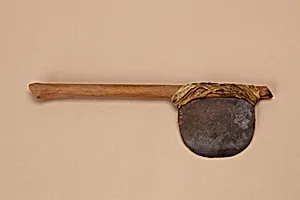
This delicate **Model Ax**, crafted around 1981–1802 B.C. during Egypt's Middle Kingdom (Dynasty 12), is a miniature marvel from the tomb of an elite individual. Standing just 4.5 cm long, it combines a copper blade with a wooden handle bound by animal hide, showcasing the era's skilled metalworking and woodworking traditions. Such models were not toys but vital grave goods, symbolically equipping the deceased for eternity. In the Middle Kingdom, a golden age of stability and artistic revival, tomb models like this ax proliferated, reflecting deeply held beliefs in the afterlife. Real axes were essential tools for farming, warfare, and rituals; their tiny replicas ensured the spirit could wield them forever, blending practicality with profound spirituality. The use of copper—Egypt's primary early metal—highlights advancements in smelting and casting, while the hide lashing adds a touch of everyday realism. Today, this gift to the Metropolitan Museum of Art from Edward S. Harkness in 1917 invites us to ponder ancient ingenuity. Though anonymous, its maker captured a world where even the smallest object carried cosmic weight. A perfect glimpse into how Egyptians bridged life and the beyond!