
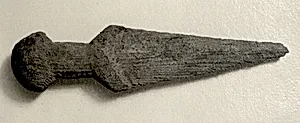
Model dagger
Unknown Artist
ca. 1981–1640 B.C.
Medium
Wood
Dimensions
l. 15.3 (6 in)
Classification
Model dagger
Period
Middle Kingdom
Department
Egyptian Art
Museum
Metropolitan Museum of Art, New York, NY
Credit
Rogers Fund and Edward S. Harkness Gift, 1922
Accession Number
22.1.664
Rights
Public Domain
Art Historical Context
This exquisite **Model Dagger**, crafted from wood around 1981–1640 B.C. during Egypt's Middle Kingdom (Dyn 12–13), a glimpse into the daily life and beliefs of ancient Egyptians. Measuring just 15.3 cm (6 in.) long, it exemplifies the period's refined artistry, when Egypt enjoyed renewed stability, prosperity, and cultural flourishing after earlier turmoil. Such miniature weapons were not mere toys but symbolic grave goods, buried with the deceased to provide protection and sustenance in the afterlife—a testament to the Egyptians' profound focus on eternity. Carved with meticulous detail, the dagger reflects the Middle Kingdom's mastery of woodworking techniques, where artisans used tools like chisels and abrasives to achieve smooth surfaces and precise forms. Wood, a precious material sourced from local acacias or imported cedar, was often painted or inlaid for realism, underscoring the value placed on realism and functionality in tomb models. These artifacts helped archaeologists reconstruct ancient Egyptian society, revealing how daggers served both practical (hunting, combat) and ritual purposes. Housed in the Metropolitan Museum of Art's Egyptian Art department (Rogers Fund and Edward S. Harkness Gift, 1922), this piece invites us to ponder the blend of utility and spirituality in Middle Kingdom culture. Imagine it accompanying a noble in their eternal journey—what stories might it whisper from over 3,800 years ago?