
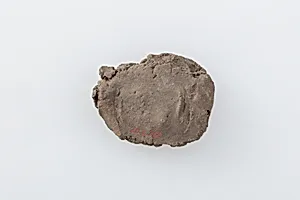
Model food offering, cake
Unknown Artist
ca. 1981–1975 B.C.
Medium
Mud
Dimensions
L. 4.8 × Th. 9 cm (1 7/8 in. × 3 9/16 in.)
Classification
Model food offering, cake
Period
Middle Kingdom
Department
Egyptian Art
Museum
Metropolitan Museum of Art, New York, NY
Credit
Rogers Fund and Edward S. Harkness Gift, 1920
Accession Number
20.3.260
Rights
Public Domain
Art Historical Context
This charming model food offering, shaped like a cake,ails from Egypt's Middle Kingdom, specifically Dynasty 12 (ca. 1981–1975 B.C.). Crafted from mud by an unknown artist, measures just 4.8 cm long and 9 cm thick, a petite testament to the ancient Egyptians' meticulous preparations for the afterlife. Such models were placed in tombs as symbolic provisions, ensuring the deceased would never hunger in eternity—alongside similar replicas of bread, beer, and meats. During the Middle Kingdom, a golden age of stability and cultural revival after the chaotic First Intermediate Period, funerary practices emphasized realism and abundance. These mud models, hand-formed with simple yet evocative detail, reflect the era's artistic focus on everyday life rendered in miniature. Mud, a readily available medium, allowed for quick production while mimicking the texture of real baked goods, highlighting resourcefulness in ritual art. Today, this piece resides in the Metropolitan Museum of Art's Egyptian Art department, acquired through the Rogers Fund and Edward S. Harkness Gift in 1920. It invites us to ponder the profound Egyptian belief in sustenance beyond death, bridging millennia with its humble, heartfelt form.