
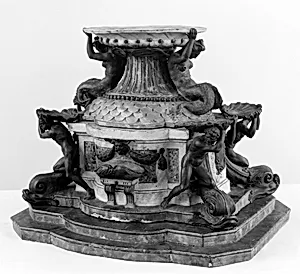
Model of a fountain
16th century
Medium
Terracotta
Dimensions
Height: 18 in. (45.7 cm)
Classification
Sculpture
Culture
Italian, Florence
Department
European Sculpture and Decorative Arts
Museum
Metropolitan Museum of Art, New York, NY
Credit
Gift of J. Pierpont Morgan, 1907
Accession Number
07.315a, b
Rights
Public Domain
Tags
Art Historical Context
This exquisite terracotta model of a fountain by Giambologna (Giovanni da Bologna), crafted in 16th-century Florence, stands as a captivating preparatory work, or *bozzetto*, for a grand sculptural fountain. Measuring 18 inches in height, it showcases the artist's mastery in capturing dynamic forms—mermaids, male nudes, and animals intertwined in a playful, mythical tableau. Terracotta, a versatile and malleable clay, was Giambologna's preferred medium for such models, allowing him to refine complex compositions before executing them in bronze or marble. Giambologna, a leading figure of Mannerism, revolutionized sculpture with his elongated figures, spiraling poses, and multi-figural groups designed to be viewed from all angles. Active in the Medici court, he created iconic public fountains that blended Renaissance humanism with fantastical elements, symbolizing the power and whimsy of nature. This piece reflects Florence's vibrant late Renaissance culture, where fountains were not just functional but emblems of civic pride and artistic innovation. A generous gift from J. Pierpont Morgan in 1907 to the Metropolitan Museum of Art, this model offers rare insight into the creative process behind Giambologna's monumental works, inviting visitors to imagine water cascading over its lively forms.
About the Artist
Giambologna · 1529–1608
Born and trained in Flanders (Douai, his birthplace, is now in France but was once in Flanders), Giambologna traveled to Italy in 1550 to study Classical and Renaissance sculpture. There, he became court sculptor of the Medici Dukes. He was famed for compositional sophistication, sensuous, tactile treatment of human body, and sheer technical virtuosity. He was extremely influential because the Med...