
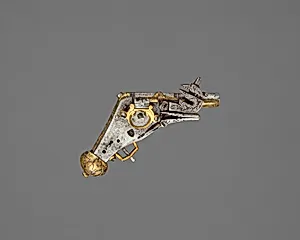
Model of Wheellock Pistol
Unknown Artist
late 16th century
Medium
Steel, brass
Dimensions
L. 1 13/16 in. (4.6 cm); L. of barrel 1 3/16 in. (3 cm); Cal. .12 in (3 mm); Wt. 0.8 oz. (22.7 g)
Classification
Firearms-Miniatures
Culture
German, Saxony
Department
Arms and Armor
Museum
Metropolitan Museum of Art, New York, NY
Credit
Gift of Abraham Silberman, 1932
Accession Number
32.136
Rights
Public Domain
Art Historical Context
This exquisite *Model of Wheellock* from late 16th-century Saxony, Germany, exemplifies the pinnacle of Renaissance metalworking craftsmanship. Crafted in steel and brass, this miniature firearm—measuring just 1 13/16 inches long with a barrel of only 1 3/16 inches and weighing a mere 0.8 ounces—replicates the innovative wheellock mechanism. Invented around 1500, the wheellock used a spring-loaded steel wheel to strike flint, creating sparks to ignite gunpowder without the slow-burning match required by earlier handguns. This self-ignition system revolutionized personal firearms, making them reliable for cavalry and nobility. Though diminutive, such models held great significance in the Arms and Armor tradition. Likely created as a presentation piece, technical prototype, or collector's item, it showcases the precision engineering of Saxon gunsmiths, who were renowned across Europe for their intricate brass inlays and durable steel components. The .12-inch caliber hints at its fidelity to functional pistols, while its survival underscores the era's blend of artistry and military innovation. Housed in The Metropolitan Museum of Art's Arms and Armor Department (gift of Abraham Silberman, 1932), this tiny marvel invites us to marvel at how 16th-century artisans packed lethal ingenuity into pocket-sized perfection—a testament to human ingenuity on the cusp of the modern age.