
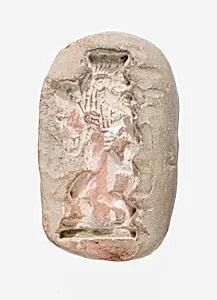
Mold: Bes with Tambourine
Unknown Artist
ca. 1390–1352 B.C.
Medium
Pottery
Dimensions
various
Classification
Mold
Period
New Kingdom
Department
Egyptian Art
Museum
Metropolitan Museum of Art, New York, NY
Credit
Rogers Fund, 1911
Accession Number
11.215.682
Rights
Public Domain
Tags
Art Historical Context
Step into the vibrant world of ancient Egypt with this pottery mold *Bes with Tambour*, crafted around 1390–1352 B.C. during the New Kingdom's Dynasty 18—a golden age of imperial power and artistic innovation under pharaohs like Amenhotep III. Housed in the Metropolitan Museum of Art's Egyptian Art Department (acquired via the Rogers Fund in 191), this artifact exemplifies the's fascination with protective deities. Bes, the mischievous dwarf-god with a leonine face and plump form, is shown shaking a tambourine,izing music, dance, and joyful warding off of evil spirits. In Egyptian culture, Bes was a beloved household guardian, especially revered by women for safeguarding childbirth and domestic life. Unlike the majestic gods of temples, his squat, grinning image brought accessible protection to everyday homes. This mold, made of fired clay, reveals sophisticated techniques: artisans pressed soft material like faience or wax into it to produce small amulets or figurines, allowing mass creation of these potent talismans. Though dimensions vary due to its utilitarian nature, the mold's survival highlights Bes's enduring popularity into the New Kingdom. It invites us to imagine ancient families placing such lively charms by their bedsides, blending art, ritual, and rhythm in a single, whimsical form.