
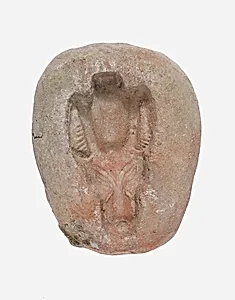
Mold for a Fox Head Amulet
Unknown Artist
ca. 1390–1352 B.C.
Medium
Pottery
Dimensions
H. 4.1 cm (1 5/8 in); w. 3.8 cm (1 1/2 in)
Classification
Mold, amulet, fox head
Period
New Kingdom
Department
Egyptian Art
Museum
Metropolitan Museum of Art, New York, NY
Credit
Rogers Fund, 1912
Accession Number
12.180.379
Rights
Public Domain
Tags
Art Historical Context
This delicate pottery mold, created during Egypt’s New Kingdom around 1390–1352 B.C., was used to shape small amulets in the form of a fox head. Measuring just over four centimeters tall, the belongs to Dynasty 18, a period for its artistic refinement and production of protective charms. Though the artisan remains unknown, the mold’s simple yet precise design reveals the practical ingenuity of ancient workshops that supplied amulets to people from many levels of society. In ancient Egyptian belief, animal-shaped amulets carried symbolic power; a fox’s alert ears and keen senses likely evoked qualities of vigilance and swiftness. By pressing material such as faience or metal into this mold, craftsmen could quickly produce identical pieces for wearers seeking protection. The survival of this humble tool offers a rare glimpse into the manufacturing process behind the thousands of amulets that once adorned necks and wrists throughout the Nile Valley. Today housed in the Metropolitan Museum of Art’s Egyptian Art department, the mold reminds visitors that even the smallest objects played vital roles in daily spiritual life. Its modest size and functional form highlight how art and utility were seamlessly combined in New Kingdom Egypt.