
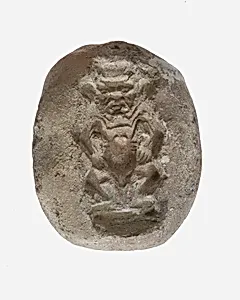
Mold for a Bes Amulet
Unknown Artist
ca. 1390–1352 B.C.
Medium
Pottery
Dimensions
H. 3.1 cm (1 1/4 in); w. 2.5 cm (1 in)
Classification
Mold, amulet, Bes
Period
New Kingdom
Department
Egyptian Art
Museum
Metropolitan Museum of Art, New York, NY
Credit
Rogers Fund, 1912
Accession Number
12.180.375
Rights
Public Domain
Tags
Art Historical Context
Step into the mystical world of ancient Egypt with this petite pottery mold for a Bes amulet, crafted around 1390–1352 B.C. during the New Kingdom's Dynasty 18—a golden age of pharaonic power under rulers like Amenhotep III and Akhenaten. Housed in the Metropolitan Museum of Art's Egyptian Art Department (acquired via the Rogers Fund in 1912), this unassuming object measures just 3.1 cm high and 2.5 cm wide, yet it reveals the everyday spirituality of ancient Egyptians. Bes, the tag's namesake, was a fierce yet jolly protective deity, often shown as a squat, grinning dwarf with leonine features, tongue out, and knives at the ready. Amulets bearing his image were worn or placed in homes to ward off evil spirits, safeguard women in childbirth, and protect children—essential talismans in a world teeming with supernatural threats. This mold, likely made from fired clay, allowed artisans to produce multiple small faience or metal amulets efficiently, highlighting innovative techniques for mass devotion. Though the artist remains unknown, the mold's survival underscores pottery's durability and the profound cultural role of personal piety in New Kingdom life, blending art, religion, and daily protection in one tiny form.