
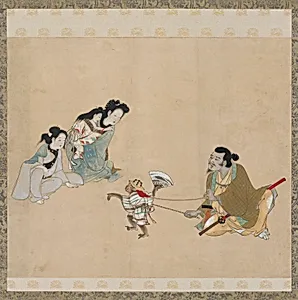
Monkey trainer and monkey performing a dance
late 17th century
Classification
Painting
Department
Smithsonian Collection
Museum
Smithsonian American Art Museum
Credit
Gift of Charles Lang Freer
Accession Number
F1903.61
Rights
Public Domain
Tags
About this artwork
Ukiyo-e
Art Historical Context
This delightful painting, *Monkey Trainer and Monkey Performing a Dance*, the whimsical street life of Edo-period Japan (1615–1868) in the of Iwasa Matabei1578–1650), a pioneering figure in early ukiyo art. Though created in the late 17th centuryafter Matabei's lifetime—it echoes his lively genre scenes, blending humor and everyday observation. Ukiyo-e, meaning "pictures of the floating," celebrated fleeting pleasures like theater, festivals, and urban spectacles, often through vibrant woodblock prints or paintings like this one. The scene likely depicts a trainer—possibly with a child or woman nearby—guiding a dancing monkey, fan in hand, amid a crowd. Performing monkeys were popular Edo street entertainers, symbolizing the playful chaos of city life in Tokyo (then Edo). Matabei's style, with its fluid lines and earthy tones, influenced later masters like Hokusai, making this work a bridge between early and mature ukiyo-e traditions. A gift from collector Charles Lang Freer, it's now treasured in the Smithsonian American Art Museum's Japanese collection. Visitors will appreciate how it invites a smile, revealing Japan's rich cultural tapestry of performance and community joy.