
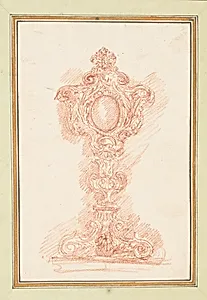
Monstrance
Classification
ornament
Department
Smithsonian Collection
Museum
Smithsonian American Art Museum
Credit
Gift of Noah Butkin
Accession Number
1977-110-4-34
Rights
Public Domain
About this artwork
Research in Progress
Art Historical Context
**Monstrance** Jean-Robert Ango, French, in Rome 1759–1770, d. 1773, ca. 1759–70* *Ornament, Smithsonian Collection, Gift of Noah Butkin Smithsonian American Art Museum* exquisite *Monstrance* by Jean-Robert Ango the opulent religious artistry of 18th-century Europe. monstrance is a vessel used in the Roman Catholic Church to the consecrated host during Eucharistic adoration, often crafted as an ornate ornament to inspire reverence. Ango, a French artisan active in Rome from 1759 to 1770, likely drew on the city's vibrant tradition of goldsmithing and silversmithing, blending French elegance with Italian Baroque influences during the late Rococo era. Created around 1759–70, it reflects a time when such objects were commissioned for churches, symbolizing divine presence through intricate designs. Though the medium remains under study—research is ongoing—this piece highlights Ango's skill in ornamental work, a craft demanding precision and splendor. Active in Rome's artistic hub, he contributed to the era's lavish liturgical arts, where every curve and flourish elevated spiritual rituals. As part of the Smithsonian American Art Museum's collection, gifted by Noah Butkin, it invites us to ponder the fusion of faith, craftsmanship, and cultural exchange across borders, reminding visitors of the enduring allure of sacred objects.