
Morse
Unknown Artist
14th century
Medium
Champlevé enamel, copper
Dimensions
Overall: 5 3/8 x 4 15/16 x 7/16 in. (13.6 x 12.5 x 1.1 cm)
Classification
Enamels-Champlevé
Culture
French
Department
Medieval Art
Museum
Metropolitan Museum of Art, New York, NY
Credit
Gift of J. Pierpont Morgan, 1917
Accession Number
17.190.793
Rights
Public Domain
Tags
Art Historical Context
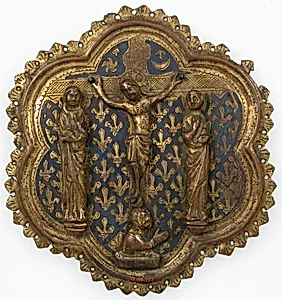
This 14th-century French morse, or clasp for a liturgical cope, exemplifies the refined craftsmanship of medieval ecclesiastical art. Created using the champlevé enamel technique on copper, the piece features recessed areas carved into the metal surface and filled with colorful enamel, then fired to create a durable, luminous design. Measuring just over five inches, it likely fastened a priest’s ceremonial garment during religious ceremonies, blending utility with spiritual symbolism. The imagery of women and a cross suggests themes of devotion and redemption common in Christian art of the period. Produced in France during the late Middle Ages, such enamels were prized for their ability to convey sacred narratives through rich, jewel-like surfaces that caught the light in dimly lit churches. Donated to the Metropolitan Museum by J. Pierpont Morgan in 1917, this work highlights the technical mastery of anonymous medieval artisans and the enduring role of portable devotional objects in connecting worshippers to their faith.