
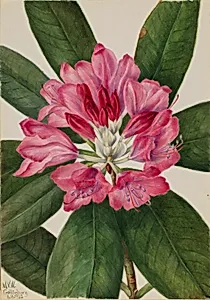
Mountain Rose-Bay (Rhododendron catawbiense)
Medium
Painting
Classification
Painting
Department
Smithsonian Collection
Museum
Smithsonian American Art Museum
Credit
Smithsonian American Art Museum, Gift of the artist
Accession Number
1970.355.55
Rights
Public Domain
Tags
Art Historical Context
Mary Vaux Walcott'sMountain Rose-Bay (hododendron catawense)*, created in 1932, the delicate beauty of this native North American wildflower, a resilient rhododendron species thriving in mountainous regions. As a painting gifted by the artist to the Smithsonian American Art, it reflects Walcott's dedication to documenting flora with precision and elegance. Displayed in the Smithsonian Collection, this work exemplifies the intersection of art and natural history, inviting visitors to appreciate the intricate details of petals and leaves rendered in a lifelike manner. Walcott, a trailblazing artist and explorer active in the early 20th century, specialized in botanical subjects, blending scientific accuracy with artistic sensitivity. Though classified simply as a painting, her style often employed watercolor techniques to mimic the translucent vibrancy of living plants. The 1932 date places it late in her career, underscoring her enduring passion for America's wild landscapes. This piece highlights the cultural value of such artworks in preserving biodiversity visually, especially as rhododendrons symbolize endurance in rugged terrains. A charming fact: Rhododendron catawbiense, or mountain rose-bay, boasts vibrant pinkish-purple blooms that dot eastern U.S. mountains—perfectly suited to Walcott's keen eye for nature's splendor. Stop by the Smithsonian American Art Museum to see how this gifted treasure bridges botany and beauty!